Top 31 ugly Huskies that are hilarious usually turn out not to be ugly at all, just mid-expression. Huskies produce some of the most photogenic chaos in the dog world: mid-howl scream faces, one ear flopped sideways, tongues caught at the worst possible angle. Add genuinely wild coat and eye genetics into the mix, and the breed delivers more variety per photo than almost any other dog.
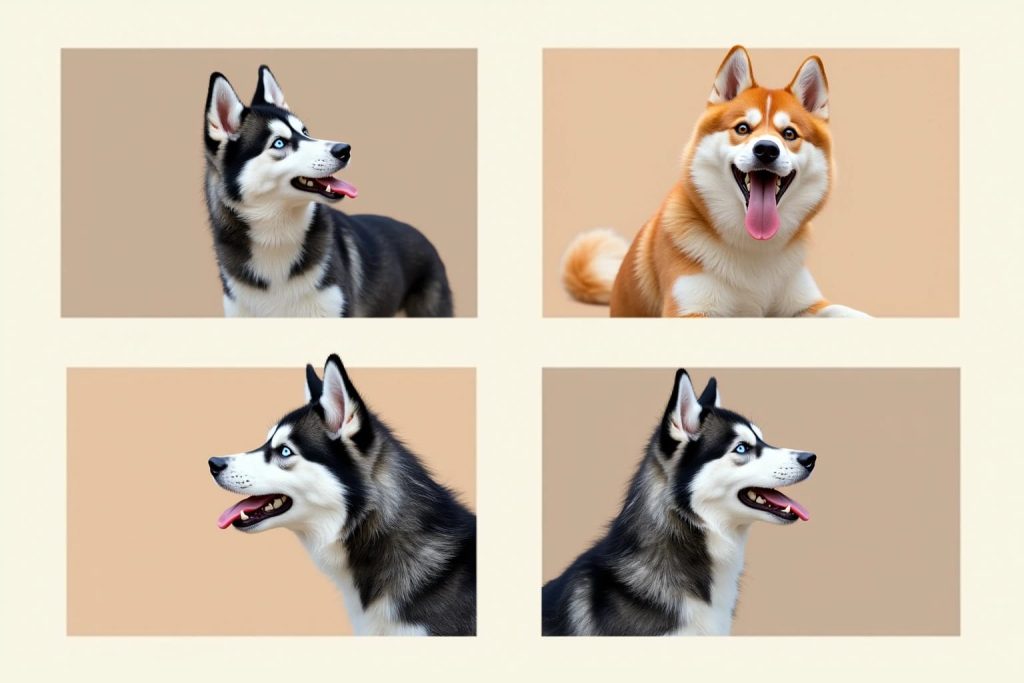
Siberian Huskies carry an unusually wide range of coat colors, eye colors, and facial expressions for a single breed, all layered on top of a thick double coat that changes dramatically with the seasons. This guide rounds up 31 Husky colors, eye types, expressions, and quirks most often behind the “ugly Husky” search, and explains the real genetics and behavior driving each one.
What Makes a Husky Look “Ugly” or Hilarious to Some People
A Husky’s face moves constantly, between howling, “talking,” yawning, and expressive ear flops, which means the breed gets caught mid-expression in photos more often than calmer dogs. Combine that with genuinely rare coat and eye variations, and Huskies produce a wider range of “so ugly it’s hilarious” material than almost any other breed.
31 Types of Ugly Huskies That Are Hilarious
1. Black and White Husky
Black and white is the most common Husky color combination, with black intensity ranging from jet black to a lighter, silver-tinged shade.
2. Grey and White Husky
Grey Huskies range from a dark, stormy wolf grey to a yellowish or silvery grey, and the shade can vary significantly even within a single litter.
3. Red and White Husky
Red and white Huskies carry liver-colored noses, lips, and eye rims instead of black, with a coat ranging from deep reddish-brown to a light coppery red.
4. Sable and White Husky
Sable Huskies have guard hairs banded with red near the roots and tipped in black, always paired with black points and a distinct reddish cast.
5. Agouti Husky
Agouti Huskies carry the “wild color” pattern, with a charcoal undercoat and guard hairs banded black, cream, and tan, giving them an unmistakably wolf-like look.

6. Pure White Husky
Pure white is considered the rarest standard Husky color, produced by recessive genes that strip pigmentation from the coat entirely, sometimes leaving a faint yellow tint.
7. Copper Husky
Copper Huskies show a warm, coppery-red tone distinct from standard red, often confused with red and white by casual observers unfamiliar with the subtle genetic difference.
8. Piebald (Pinto) Husky
Piebald Huskies, called pinto by the AKC, show large irregular patches of color on a predominantly white body, with the amount of white sometimes covering more than half the coat.
9. Merle Husky
Merle Huskies display a mottled, patchy coat pattern that most breed authorities flag as controversial, since the merle gene is linked to deafness and eye defects when inherited from two merle parents.
10. Blue-Eyed Husky
Blue eyes come from a gene entirely separate from coat color, meaning Huskies of any coat shade, from pure white to solid agouti, can carry striking blue eyes.
11. Brown-Eyed Husky
Brown-eyed Huskies are just as breed-standard correct as blue-eyed dogs, though many puppies start with blue eyes that shift to brown before seven months old.
12. Heterochromia (Bi-Eyed) Husky
Bi-eyed Huskies have one blue eye and one differently colored eye, a harmless condition called heterochromia that ranks among the breed’s most recognizable traits.

13. Parti-Eyed or Split-Eyed Husky
Parti-eyed Huskies show one dominant eye color flecked with spots of another, while split-eyed dogs have irises divided cleanly in half between two colors, both rarer than standard heterochromia.
14. Mid-“Awoo” Howl Face
Caught mid-howl, a Husky’s mouth stretches into an exaggerated oval with the tongue curled, producing the classic “awoo” screenshot that dominates Husky meme pages.
15. The Husky Scream Face
Huskies are famous for vocalizing dramatically when frustrated or excited, and a camera catching the exact peak of that “scream” produces one of the breed’s most reliably hilarious expressions.

16. “Talking” Husky Mid-Word
Huskies are known for a wide vocal range that owners describe as “talking,” and photos caught mid-vocalization often show an oddly human, exaggerated mouth shape.
17. One Ear Up, One Ear Down
A Husky’s naturally erect triangular ears sometimes flop unevenly during play or rest, producing a lopsided, asymmetrical look that reads as comedic rather than alarming.
18. Tongue-Out Yawn Face
A mid-yawn photo catches a Husky’s jaw stretched wide with the tongue curled backward, a moment that looks nothing like the dog’s usual composed expression.
19. Cross-Eyed Husky Stare
Some Huskies briefly cross their eyes while focused intently on a close object, a harmless quirk that photographs as a permanently startled expression.
20. Derp Face Mid-Blink
Cameras catching a Husky mid-blink freeze one eye half-closed and the other wide open, producing the lopsided “derp” look common across dog meme culture.
21. Husky “Smile” With Bared Teeth
Huskies sometimes pull their lips back into a full grin showing all their teeth, a friendly greeting behavior that can look startling out of context.
22. Soaking Wet Post-Bath Husky
A Husky’s thick double coat flattens dramatically when wet, revealing a noticeably leaner silhouette that looks almost like a different breed until the coat dries.
23. Windblown Zoomies Face
Huskies caught mid-sprint during a burst of zoomies often show ears pinned back and fur rippling in every direction, an unmistakably chaotic look.
24. Mid-Sneeze Husky
A photo timed to a sneeze captures the eyes squeezed shut and the snout scrunched, a brief expression that looks far goofier frozen in a still frame.
25. Snoring With Tongue Out
Deep sleep sometimes leaves a Husky’s tongue lolling out the side of its mouth, an unglamorous but endlessly popular photo subject among owners.
26. Coat-Blowing Shedding Season
Twice a year, Huskies “blow” their undercoat in large clumps, leaving patchy, uneven fur until the new coat fully grows back in.
27. Puppy Uglies (Awkward Lanky Growth Stage)
Adolescent Huskies go through an awkward growth phase with oversized paws, gangly legs, and a coat that hasn’t yet filled in, mirroring the “puppy uglies” stage seen in other breeds.
28. Shaved Husky
Shaving a Husky’s double coat is widely discouraged by veterinarians, since the undercoat regulates body temperature and protects skin from sunburn, and regrowth often comes in patchy and uneven.

29. Miniature (Mini) Husky
Miniature Husky is not a separate breed but simply a smaller-statured Siberian Husky, sharing the same wolf-like face, coat colors, and heterochromia possibilities as the standard size.
30. Pomsky
Pomsky, a Husky and Pomeranian mix, can inherit an unpredictable blend of traits from both parent breeds, sometimes producing a disproportionately large fluffy head on a small body.

31. Snow Nose
Snow nose, also called winter nose, is a seasonal fading of a Husky’s black nose pigment into pink or brown patches, a harmless cosmetic change that reverses as the seasons turn.

Health Notes Behind the Husky’s Look
Merle-patterned Huskies carry elevated risk of deafness and eye defects when bred from two merle parents, the same concern seen in merle-patterned Poodles and French Bulldogs. Shaving a Husky’s double coat can also cause long-term coat damage and increases the risk of sunburn and overheating, since the undercoat is designed to insulate rather than simply add bulk.
Heterochromia, snow nose, and coat-blowing season are all cosmetic and harmless, requiring no medical treatment despite their dramatic appearance in photos.
Ugly Huskies Compared to Other Ugly Dog Breeds
| Breed | Defining “Ugly” Trait | Shared Health Concern |
|---|---|---|
| Husky | Derp expressions, coat blow, snow nose | Merle deafness risk, shave-related overheating |
| Poodle | Matted cords, extreme grooming clips | Skin infections, patellar luxation |
| Yorkie | Matted coat, puppy uglies stage | Dental crowding, hypoglycemia in teacups |
| French Bulldog | Bat ears, flat face | BOAS, spinal issues |
| Boston Terrier | Bulging eyes, bat ears | BOAS, eye conditions |
Huskies stand apart from most breeds on this list, since their “ugly” reputation comes almost entirely from expressive behavior and coat genetics rather than facial structure.
Why People Find Ugly Huskies Endearing Anyway
Vocal, expressive, and dramatically photogenic, Huskies turn nearly every strong emotion into a shareable photo, which explains why the breed dominates dog meme culture despite, or because of, its goofiest moments. Wolf-like coloring and piercing eyes give even a mid-scream Husky an undeniably striking baseline appearance.
High energy and pack-oriented loyalty round out the appeal. Huskies bond closely with their families and thrive on activity, traits that keep the breed popular regardless of how many unflattering photos exist online.
Common Misconceptions About Husky Appearance
Many people assume snow nose signals a health problem, but the pigment fading is purely cosmetic and reverses on its own as seasons change. Owners sometimes rush to a vet unnecessarily over a completely normal seasonal shift.
Another misconception treats shaving as a simple solution for shedding. Removing a Husky’s double coat can permanently damage the coat’s texture and leaves the dog more vulnerable to sunburn and overheating rather than solving the underlying shedding issue.
Fans of unconventional-looking dogs rarely stop at one breed, and Husky enthusiasts often branch out into other corners of the community, from the ugliest chihuahua breeds to a broader top ugly dog breeds guide covering the full spectrum of unusual canine looks. Some readers enjoy comparing dogs against the wider animal kingdom through a list of cute ugly animals that proves odd looks are not unique to dogs at all. Others circle back to two more distinctive breeds by exploring the rare exotic colors in the ugly french bulldogs guide, or reading about the corded dreadlocks and grooming extremes covered in the top 15 ugliest poodles guide.
Conclusion
Every entry on this list of ugly Huskies comes down to timing, genetics, or grooming rather than a genuinely unattractive dog, from mid-howl scream faces to rare heterochromia and seasonal snow nose fading. Huskies pack more coat, eye, and expression variety into one breed than almost any other dog, which is exactly why they generate so much hilarious material.
Whether a Husky photo reads as ugly or hilarious usually depends entirely on the split second the camera caught, and most of these “ugly” moments are really just a strikingly expressive breed being itself. Readers curious about other breeds with equally distinctive looks will find plenty more to explore across the wider world of unusual-looking animals.
Frequently Asked Questions
Why do huskies look so funny in photos?
Huskies rarely look ugly from anatomy. Most hilarious photos catch them mid-howl, mid-yawn, or mid-sneeze, moments that look far goofier frozen in a still frame.
What is heterochromia in huskies?
Heterochromia is a harmless genetic condition where a Husky has one blue eye and one differently colored eye, one of the breed’s most recognizable traits.
What causes a husky’s snow nose?
Snow nose is a seasonal fading of a Husky’s black nose pigment into pink or brown patches, a harmless cosmetic change that reverses as seasons change.
Should you shave a husky’s double coat?
No. Shaving removes the insulating undercoat, increases the risk of sunburn and overheating, and often causes patchy, damaged regrowth.
What is an agouti husky?
Agouti Huskies carry a charcoal undercoat with guard hairs banded in black, cream, and tan, giving them an unmistakably wolf-like appearance.
Are merle huskies healthy?
Merle-patterned huskies bred from two merle parents carry an elevated risk of deafness and eye defects, similar to merle patterns in other breeds.
Is a miniature husky a different breed?
Miniature Husky is not a separate breed, just a smaller-statured Siberian Husky with the same coat colors and eye traits as the standard size.
How often do huskies shed their coat?
Yes. Huskies shed their undercoat heavily twice a year in a process called coat blowing, requiring daily brushing during that period.